BLOG DETAILS
BLOG DETAILS
BLOG DETAILS
Strengthening India’s Industrial Backbone Through Smart Logistics Integration
Strengthening India’s Industrial Backbone Through Smart Logistics Integration
Strengthening India’s Industrial Backbone Through Smart Logistics Integration
Jan 25, 2026
/
savik infra
/
12
Jan 25, 2026
/
savik infra
/
12
Jan 25, 2026
/
savik infra
/
12
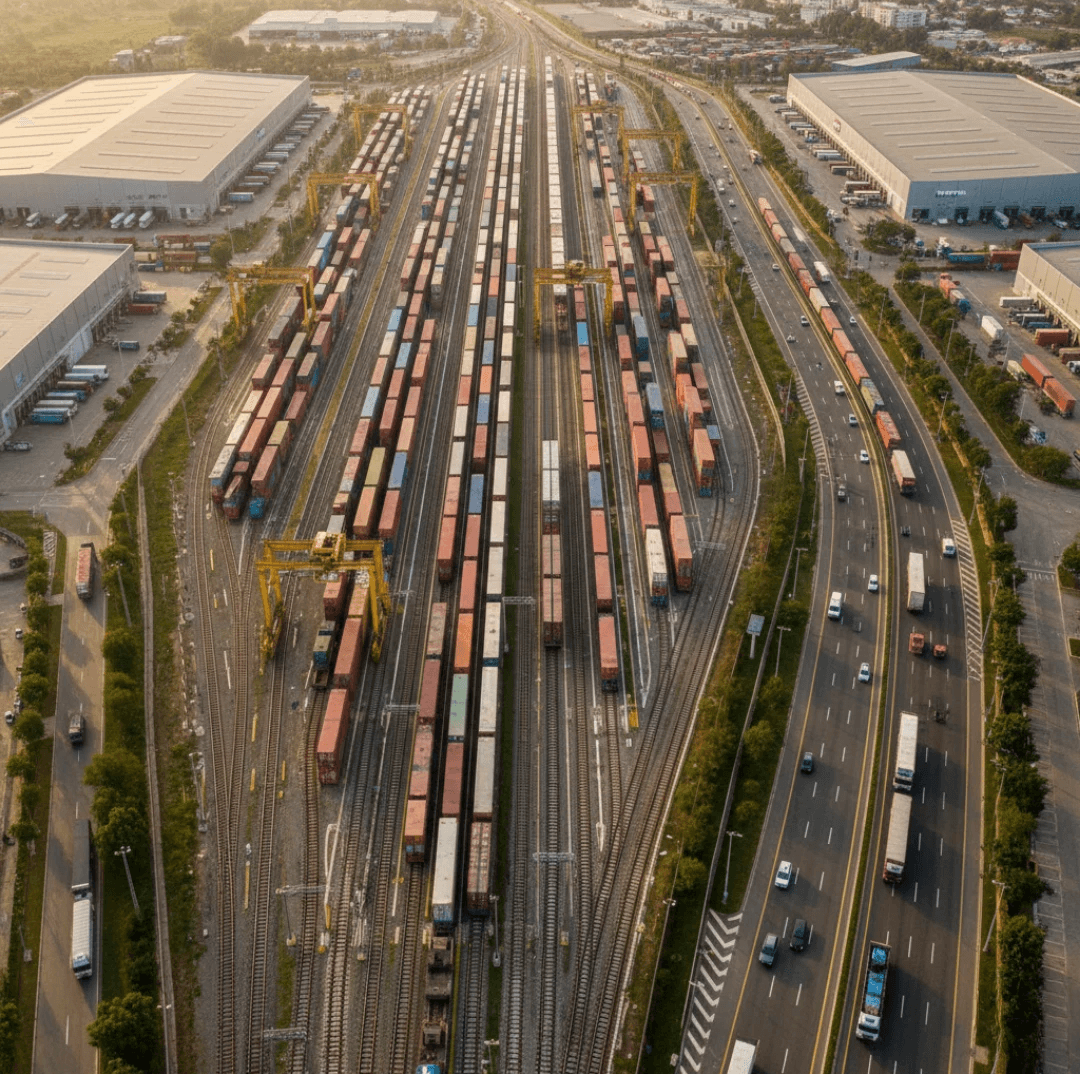
Introduction: The New Era of Industrial Logistics in India
India’s industrial growth story is entering a transformative phase. As manufacturing scales, exports increase, and infrastructure investment accelerates, the focus has shifted toward building an efficient, integrated logistics ecosystem. Smart logistics integration in India is no longer a support function—it is becoming the backbone of industrial competitiveness.
Efficient logistics determine cost leadership, delivery reliability, and supply chain resilience. With policy direction from Indian Railways and large-scale infrastructure planning under national master plans, India is moving toward a seamlessly connected multimodal logistics network that integrates rail, road, ports, and warehousing into a unified system.
For infrastructure leaders like Savik Infra, smart logistics integration represents an opportunity to engineer long-term industrial value through connectivity, precision planning, and technology-driven execution.
Understanding Smart Logistics Integration
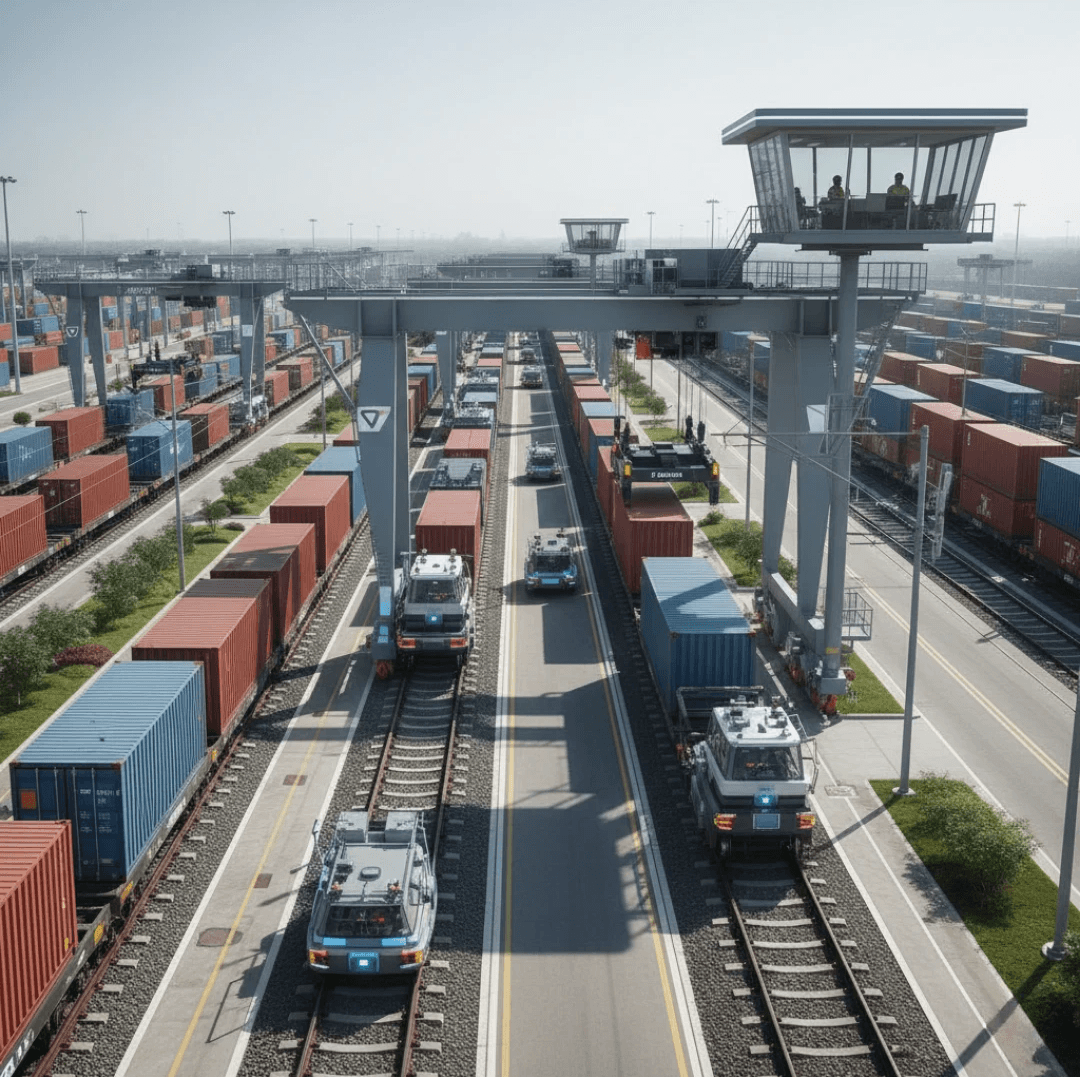
Smart logistics integration refers to the strategic coordination of multiple transportation modes—railways, highways, ports, and inland terminals—supported by digital tracking, automation, and real-time data management. Instead of fragmented transport systems, industries now require synchronized infrastructure that reduces delays, lowers operational costs, and enhances cargo visibility.
In India, this integration is taking shape through multimodal logistics parks, dedicated freight corridors, industrial corridors, and private rail connectivity projects. The objective is to reduce logistics costs as a percentage of GDP and create a globally competitive manufacturing ecosystem.
When rail connectivity, warehouse infrastructure, road access, and digital monitoring systems function together, industries benefit from smoother supply chains, predictable freight movement, and scalable growth potential.
Introduction: The New Era of Industrial Logistics in India
India’s industrial growth story is entering a transformative phase. As manufacturing scales, exports increase, and infrastructure investment accelerates, the focus has shifted toward building an efficient, integrated logistics ecosystem. Smart logistics integration in India is no longer a support function—it is becoming the backbone of industrial competitiveness.
Efficient logistics determine cost leadership, delivery reliability, and supply chain resilience. With policy direction from Indian Railways and large-scale infrastructure planning under national master plans, India is moving toward a seamlessly connected multimodal logistics network that integrates rail, road, ports, and warehousing into a unified system.
For infrastructure leaders like Savik Infra, smart logistics integration represents an opportunity to engineer long-term industrial value through connectivity, precision planning, and technology-driven execution.
Understanding Smart Logistics Integration
Smart logistics integration refers to the strategic coordination of multiple transportation modes—railways, highways, ports, and inland terminals—supported by digital tracking, automation, and real-time data management. Instead of fragmented transport systems, industries now require synchronized infrastructure that reduces delays, lowers operational costs, and enhances cargo visibility.
In India, this integration is taking shape through multimodal logistics parks, dedicated freight corridors, industrial corridors, and private rail connectivity projects. The objective is to reduce logistics costs as a percentage of GDP and create a globally competitive manufacturing ecosystem.
When rail connectivity, warehouse infrastructure, road access, and digital monitoring systems function together, industries benefit from smoother supply chains, predictable freight movement, and scalable growth potential.
Introduction: The New Era of Industrial Logistics in India
India’s industrial growth story is entering a transformative phase. As manufacturing scales, exports increase, and infrastructure investment accelerates, the focus has shifted toward building an efficient, integrated logistics ecosystem. Smart logistics integration in India is no longer a support function—it is becoming the backbone of industrial competitiveness.
Efficient logistics determine cost leadership, delivery reliability, and supply chain resilience. With policy direction from Indian Railways and large-scale infrastructure planning under national master plans, India is moving toward a seamlessly connected multimodal logistics network that integrates rail, road, ports, and warehousing into a unified system.
For infrastructure leaders like Savik Infra, smart logistics integration represents an opportunity to engineer long-term industrial value through connectivity, precision planning, and technology-driven execution.
Understanding Smart Logistics Integration
Smart logistics integration refers to the strategic coordination of multiple transportation modes—railways, highways, ports, and inland terminals—supported by digital tracking, automation, and real-time data management. Instead of fragmented transport systems, industries now require synchronized infrastructure that reduces delays, lowers operational costs, and enhances cargo visibility.
In India, this integration is taking shape through multimodal logistics parks, dedicated freight corridors, industrial corridors, and private rail connectivity projects. The objective is to reduce logistics costs as a percentage of GDP and create a globally competitive manufacturing ecosystem.
When rail connectivity, warehouse infrastructure, road access, and digital monitoring systems function together, industries benefit from smoother supply chains, predictable freight movement, and scalable growth potential.
Building home, happy hearts
Building home, happy hearts
Innovative technology with building better development
Innovative technology with building better development
Discovering possibility and transparent communication
Discovering possibility and transparent communication
The ability to turnaround costing with sustainable construction
The ability to turnaround costing with sustainable construction
Building home, happy hearts
Innovative technology with building better development
Discovering possibility and transparent communication
The ability to turnaround costing with sustainable construction
Building home, happy hearts
Innovative technology with building better development
Discovering possibility and transparent communication
The ability to turnaround costing with sustainable construction
Infrastructure-Led Growth & Government Push
India’s infrastructure expansion is strongly aligned with logistics modernization. The development of freight corridors by the Dedicated Freight Corridor Corporation of India Limited has significantly improved long-haul cargo movement efficiency. Faster transit times and higher freight capacity are encouraging industries to align their logistics strategies with rail-based transport.
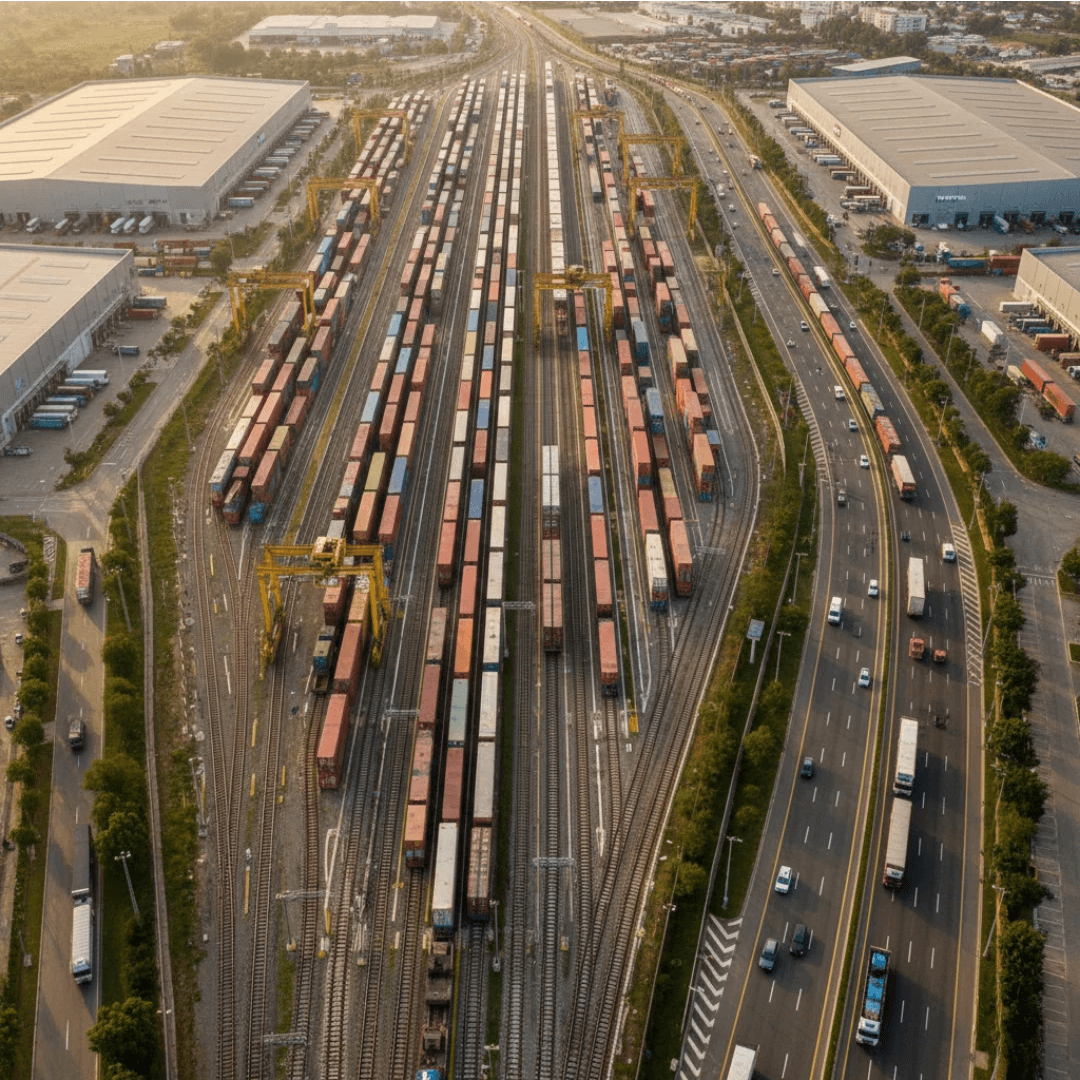
Simultaneously, multimodal logistics parks are being developed to integrate rail sidings, container terminals, warehousing facilities, and highway connectivity within a single ecosystem. This reduces transshipment time and improves freight handling efficiency.
Such infrastructure-led initiatives are strengthening India’s industrial backbone by enabling industries to operate with lower transportation costs, better supply chain predictability, and reduced dependency on road-only logistics models.
Role of Rail Connectivity in Industrial Integration
Rail infrastructure plays a central role in smart logistics integration. Rail-based freight movement is more cost-effective, environmentally sustainable, and suitable for bulk commodities. Direct rail connectivity to industrial facilities allows seamless cargo loading and unloading, minimizing delays at public terminals.
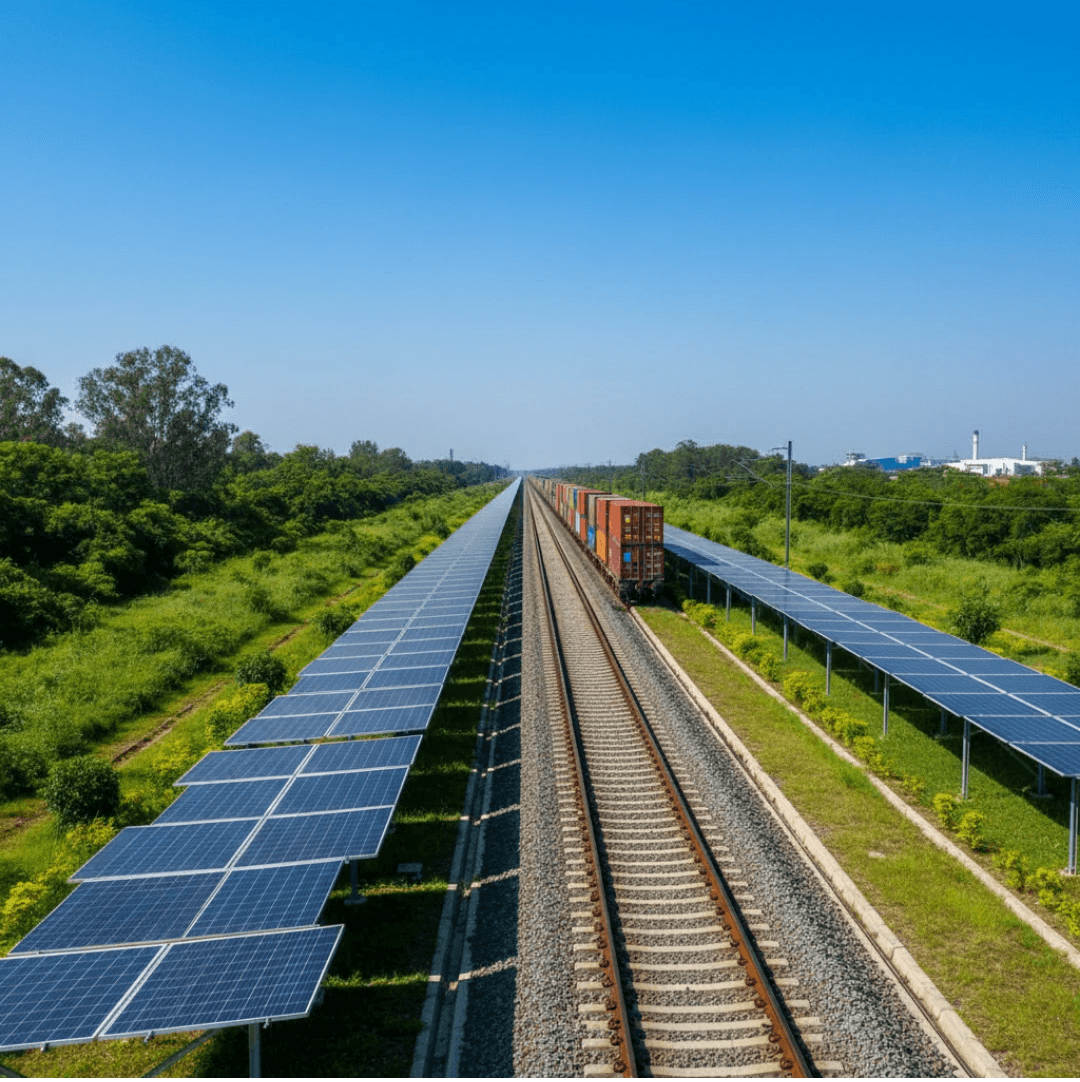
With increasing electrification and modernization of railway networks by Indian Railways, industries are investing in private railway sidings and freight terminals to enhance operational control. Integrated rail systems reduce carbon emissions, improve energy efficiency, and support long-term sustainability goals.
For sectors such as steel, cement, power generation, mining, FMCG, and containerized cargo, rail integration ensures operational stability and competitive freight economics.
Technology & Digital Transformation in Logistics
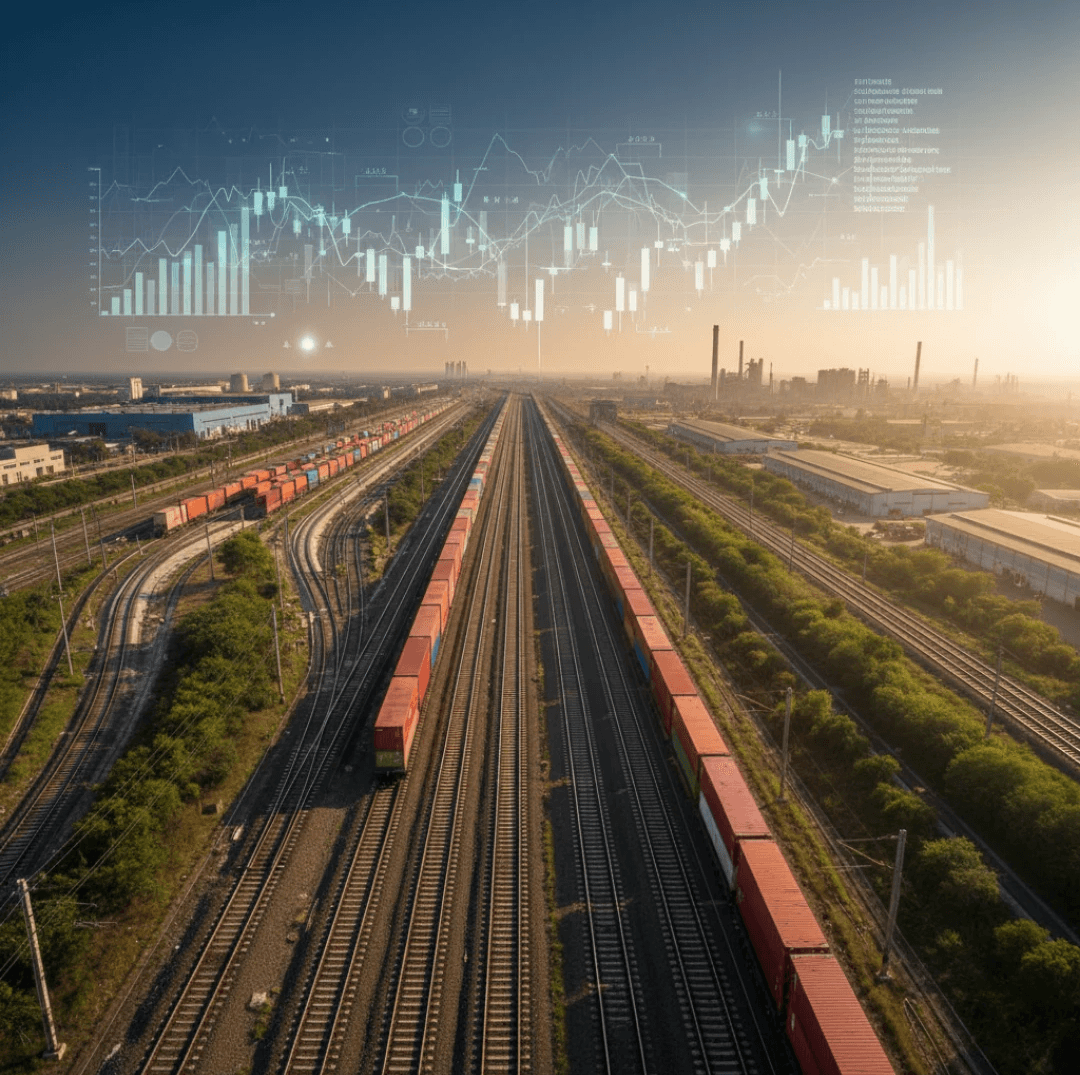
Smart logistics integration is powered by technology. Digital freight management systems, IoT-based cargo tracking, automated loading mechanisms, and real-time inventory monitoring are transforming traditional logistics models.
Modern infrastructure projects incorporate data-driven planning, predictive maintenance, and centralized control systems that enable industries to optimize routes, monitor shipment status, and improve decision-making. The integration of physical infrastructure with digital intelligence is what defines next-generation logistics solutions in India.
This technological advancement ensures transparency, faster response times, and reduced operational inefficiencies—critical factors in a competitive industrial landscape.
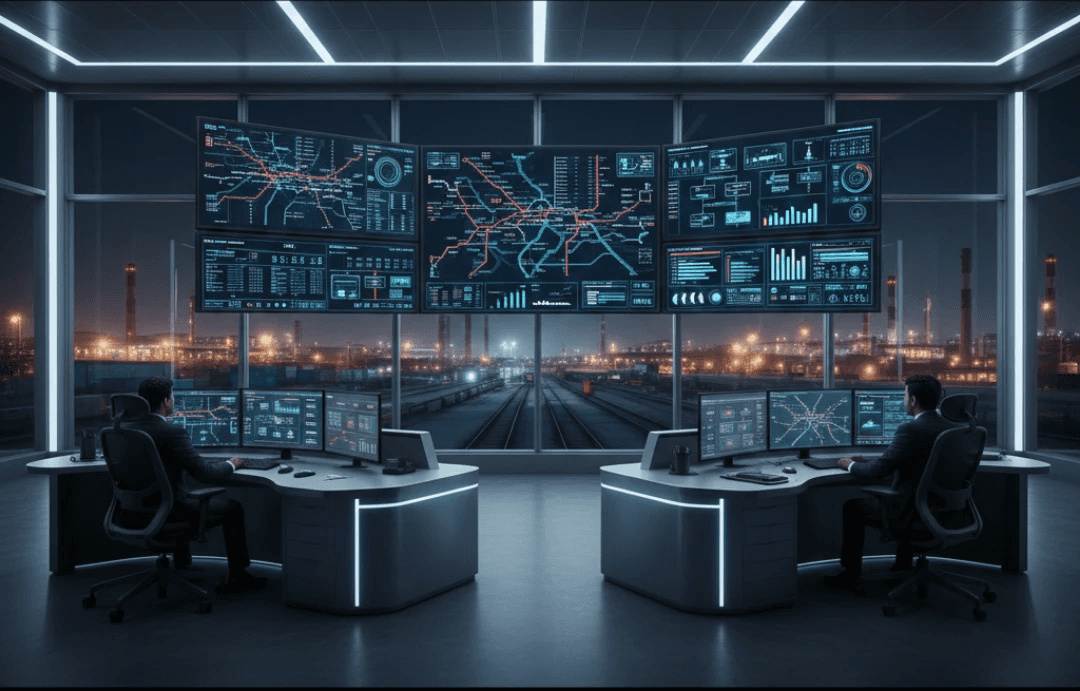
Infrastructure-Led Growth & Government Push
India’s infrastructure expansion is strongly aligned with logistics modernization. The development of freight corridors by the Dedicated Freight Corridor Corporation of India Limited has significantly improved long-haul cargo movement efficiency. Faster transit times and higher freight capacity are encouraging industries to align their logistics strategies with rail-based transport.
Simultaneously, multimodal logistics parks are being developed to integrate rail sidings, container terminals, warehousing facilities, and highway connectivity within a single ecosystem. This reduces transshipment time and improves freight handling efficiency.
Such infrastructure-led initiatives are strengthening India’s industrial backbone by enabling industries to operate with lower transportation costs, better supply chain predictability, and reduced dependency on road-only logistics models.
Role of Rail Connectivity in Industrial Integration
Rail infrastructure plays a central role in smart logistics integration. Rail-based freight movement is more cost-effective, environmentally sustainable, and suitable for bulk commodities. Direct rail connectivity to industrial facilities allows seamless cargo loading and unloading, minimizing delays at public terminals.
With increasing electrification and modernization of railway networks by Indian Railways, industries are investing in private railway sidings and freight terminals to enhance operational control. Integrated rail systems reduce carbon emissions, improve energy efficiency, and support long-term sustainability goals.
For sectors such as steel, cement, power generation, mining, FMCG, and containerized cargo, rail integration ensures operational stability and competitive freight economics.
Technology & Digital Transformation in Logistics
Smart logistics integration is powered by technology. Digital freight management systems, IoT-based cargo tracking, automated loading mechanisms, and real-time inventory monitoring are transforming traditional logistics models.
Modern infrastructure projects incorporate data-driven planning, predictive maintenance, and centralized control systems that enable industries to optimize routes, monitor shipment status, and improve decision-making. The integration of physical infrastructure with digital intelligence is what defines next-generation logistics solutions in India.
This technological advancement ensures transparency, faster response times, and reduced operational inefficiencies—critical factors in a competitive industrial landscape.
Infrastructure-Led Growth & Government Push
India’s infrastructure expansion is strongly aligned with logistics modernization. The development of freight corridors by the Dedicated Freight Corridor Corporation of India Limited has significantly improved long-haul cargo movement efficiency. Faster transit times and higher freight capacity are encouraging industries to align their logistics strategies with rail-based transport.
Simultaneously, multimodal logistics parks are being developed to integrate rail sidings, container terminals, warehousing facilities, and highway connectivity within a single ecosystem. This reduces transshipment time and improves freight handling efficiency.
Such infrastructure-led initiatives are strengthening India’s industrial backbone by enabling industries to operate with lower transportation costs, better supply chain predictability, and reduced dependency on road-only logistics models.
Role of Rail Connectivity in Industrial Integration
Rail infrastructure plays a central role in smart logistics integration. Rail-based freight movement is more cost-effective, environmentally sustainable, and suitable for bulk commodities. Direct rail connectivity to industrial facilities allows seamless cargo loading and unloading, minimizing delays at public terminals.
With increasing electrification and modernization of railway networks by Indian Railways, industries are investing in private railway sidings and freight terminals to enhance operational control. Integrated rail systems reduce carbon emissions, improve energy efficiency, and support long-term sustainability goals.
For sectors such as steel, cement, power generation, mining, FMCG, and containerized cargo, rail integration ensures operational stability and competitive freight economics.
Technology & Digital Transformation in Logistics
Smart logistics integration is powered by technology. Digital freight management systems, IoT-based cargo tracking, automated loading mechanisms, and real-time inventory monitoring are transforming traditional logistics models.
Modern infrastructure projects incorporate data-driven planning, predictive maintenance, and centralized control systems that enable industries to optimize routes, monitor shipment status, and improve decision-making. The integration of physical infrastructure with digital intelligence is what defines next-generation logistics solutions in India.
This technological advancement ensures transparency, faster response times, and reduced operational inefficiencies—critical factors in a competitive industrial landscape.
India’s industrial growth story is entering a transformative phase. As manufacturing scales, exports increase, and infrastructure investment accelerates, the focus has shifted toward building an efficient, integrated logistics ecosystem.
India’s industrial growth story is entering a transformative phase. As manufacturing scales, exports increase, and infrastructure investment accelerates, the focus has shifted toward building an efficient, integrated logistics ecosystem.
India’s industrial growth story is entering a transformative phase. As manufacturing scales, exports increase, and infrastructure investment accelerates, the focus has shifted toward building an efficient, integrated logistics ecosystem.
India’s industrial growth story is entering a transformative phase. As manufacturing scales, exports increase, and infrastructure investment accelerates, the focus has shifted toward building an efficient, integrated logistics ecosystem.
Economic & Strategic Benefits of Integrated Logistics
An integrated logistics framework strengthens India’s industrial backbone by reducing overall logistics costs and improving supply chain resilience. Efficient multimodal transport lowers freight expenses, reduces transit damage, and enhances delivery timelines.
Smart logistics also enables scalability. As industrial output increases, integrated systems can handle higher cargo volumes without major operational disruptions. This adaptability is essential for India’s ambition to become a global manufacturing and export hub.
Additionally, integrated rail-road-port connectivity reduces congestion, lowers fuel consumption, and aligns with sustainability objectives. For industries seeking long-term profitability, logistics integration is a strategic investment rather than an operational expense.
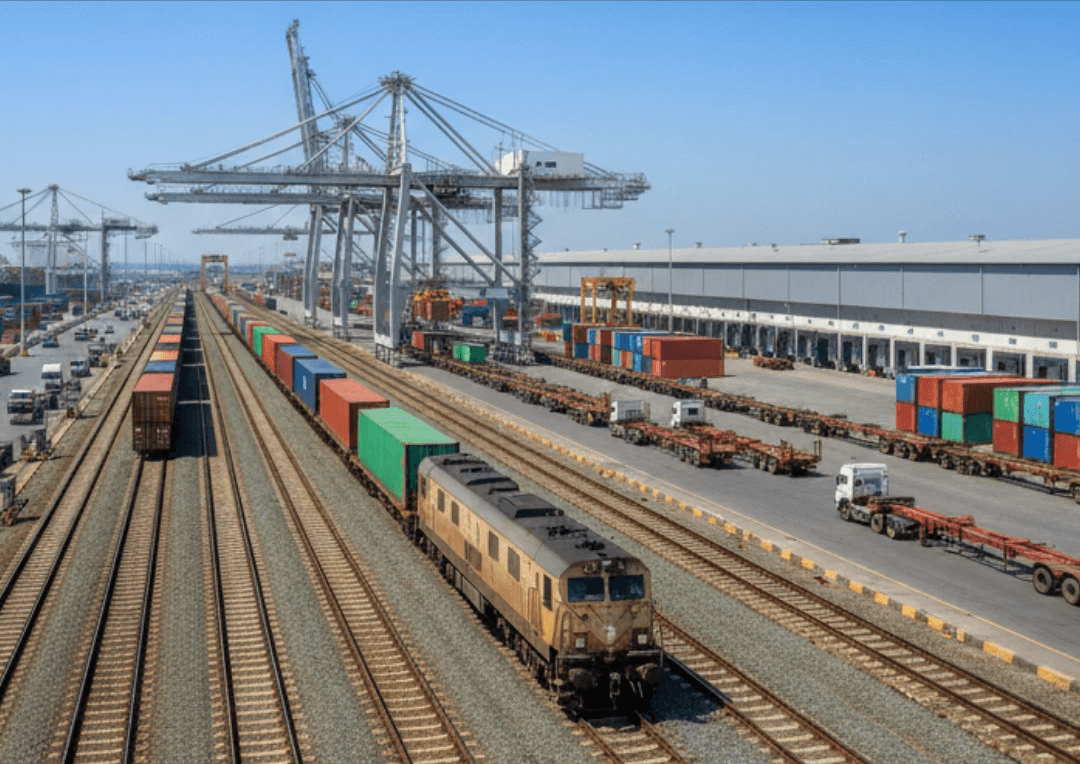
The Future of Smart Logistics in India
India’s future industrial growth will be closely linked to its logistics modernization strategy. Continued expansion of freight corridors, industrial corridors, port connectivity projects, and private rail infrastructure will further accelerate integration.
As India strengthens its “Make in India” vision and global trade footprint, industries will increasingly prioritize end-to-end logistics solutions that combine infrastructure expertise, regulatory compliance, and digital innovation.
Smart logistics integration is not merely about moving goods—it is about creating a resilient, technology-enabled ecosystem that supports economic growth and industrial competitiveness for decades to come.
Conclusion
Strengthening India’s industrial backbone requires more than production capacity—it demands intelligent, efficient, and integrated logistics infrastructure. By aligning rail connectivity, multimodal transport systems, and digital technologies, India is building a logistics framework capable of supporting sustained industrial expansion.
For infrastructure leaders like Savik Infra, smart logistics integration represents a commitment to engineering excellence, operational efficiency, and future-ready industrial connectivity. As industries evolve, integrated logistics will remain the foundation of India’s economic transformation.
Economic & Strategic Benefits of Integrated Logistics
An integrated logistics framework strengthens India’s industrial backbone by reducing overall logistics costs and improving supply chain resilience. Efficient multimodal transport lowers freight expenses, reduces transit damage, and enhances delivery timelines.
Smart logistics also enables scalability. As industrial output increases, integrated systems can handle higher cargo volumes without major operational disruptions. This adaptability is essential for India’s ambition to become a global manufacturing and export hub.
Additionally, integrated rail-road-port connectivity reduces congestion, lowers fuel consumption, and aligns with sustainability objectives. For industries seeking long-term profitability, logistics integration is a strategic investment rather than an operational expense.
The Future of Smart Logistics in India
India’s future industrial growth will be closely linked to its logistics modernization strategy. Continued expansion of freight corridors, industrial corridors, port connectivity projects, and private rail infrastructure will further accelerate integration.
As India strengthens its “Make in India” vision and global trade footprint, industries will increasingly prioritize end-to-end logistics solutions that combine infrastructure expertise, regulatory compliance, and digital innovation.
Smart logistics integration is not merely about moving goods—it is about creating a resilient, technology-enabled ecosystem that supports economic growth and industrial competitiveness for decades to come.
Conclusion
Strengthening India’s industrial backbone requires more than production capacity—it demands intelligent, efficient, and integrated logistics infrastructure. By aligning rail connectivity, multimodal transport systems, and digital technologies, India is building a logistics framework capable of supporting sustained industrial expansion.
For infrastructure leaders like Savik Infra, smart logistics integration represents a commitment to engineering excellence, operational efficiency, and future-ready industrial connectivity. As industries evolve, integrated logistics will remain the foundation of India’s economic transformation.
Economic & Strategic Benefits of Integrated Logistics
An integrated logistics framework strengthens India’s industrial backbone by reducing overall logistics costs and improving supply chain resilience. Efficient multimodal transport lowers freight expenses, reduces transit damage, and enhances delivery timelines.
Smart logistics also enables scalability. As industrial output increases, integrated systems can handle higher cargo volumes without major operational disruptions. This adaptability is essential for India’s ambition to become a global manufacturing and export hub.
Additionally, integrated rail-road-port connectivity reduces congestion, lowers fuel consumption, and aligns with sustainability objectives. For industries seeking long-term profitability, logistics integration is a strategic investment rather than an operational expense.
The Future of Smart Logistics in India
India’s future industrial growth will be closely linked to its logistics modernization strategy. Continued expansion of freight corridors, industrial corridors, port connectivity projects, and private rail infrastructure will further accelerate integration.
As India strengthens its “Make in India” vision and global trade footprint, industries will increasingly prioritize end-to-end logistics solutions that combine infrastructure expertise, regulatory compliance, and digital innovation.
Smart logistics integration is not merely about moving goods—it is about creating a resilient, technology-enabled ecosystem that supports economic growth and industrial competitiveness for decades to come.
Conclusion
Strengthening India’s industrial backbone requires more than production capacity—it demands intelligent, efficient, and integrated logistics infrastructure. By aligning rail connectivity, multimodal transport systems, and digital technologies, India is building a logistics framework capable of supporting sustained industrial expansion.
For infrastructure leaders like Savik Infra, smart logistics integration represents a commitment to engineering excellence, operational efficiency, and future-ready industrial connectivity. As industries evolve, integrated logistics will remain the foundation of India’s economic transformation.
OUR LATEST NEWS
OUR LATEST NEWS
OUR LATEST NEWS