BLOG DETAILS
BLOG DETAILS
BLOG DETAILS
The Difference Between Residential, Commercial & Infrastructure Construction
The Difference Between Residential, Commercial & Infrastructure Construction
The Difference Between Residential, Commercial & Infrastructure Construction
Jan 15, 2026
/
Savik Infra
/
8 mins
Jan 15, 2026
/
Savik Infra
/
8 mins
Jan 15, 2026
/
Savik Infra
/
8 mins
Understanding the Scope of Construction Projects
Construction is a broad industry that covers everything from individual homes to massive national infrastructure projects. Residential construction, commercial construction, and infrastructure construction may appear similar on the surface, but they differ significantly in terms of scale, complexity, regulations, timelines, and execution approach. Understanding these differences is essential for clients, investors, and developers planning construction projects in India. Each segment plays a unique role in economic growth and urban development, and choosing the right construction partner depends on the type of project involved.
What Defines Residential Construction
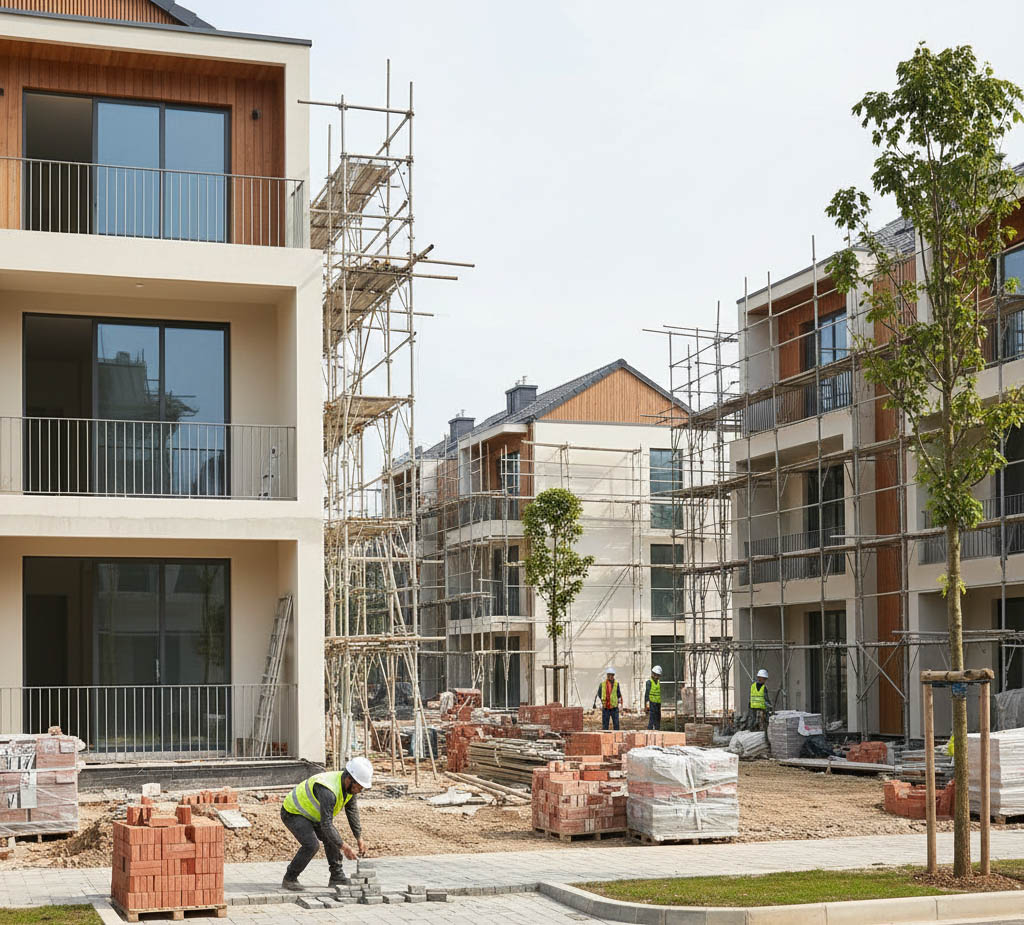
Residential construction focuses on building living spaces designed for individuals and families. This includes independent houses, villas, apartments, townships, and housing societies. Residential construction projects in India prioritize comfort, safety, aesthetics, and efficient space utilization. Factors such as ventilation, natural light, material quality, and finishing play a major role in residential buildings. Compared to other construction types, residential projects usually operate on smaller budgets and shorter timelines. However, compliance with building codes, local development authority norms, and sustainability standards remains critical. High SEO keywords such as residential construction in India, housing construction projects, and home construction services define this segment clearly.
Key Characteristics of Commercial Construction
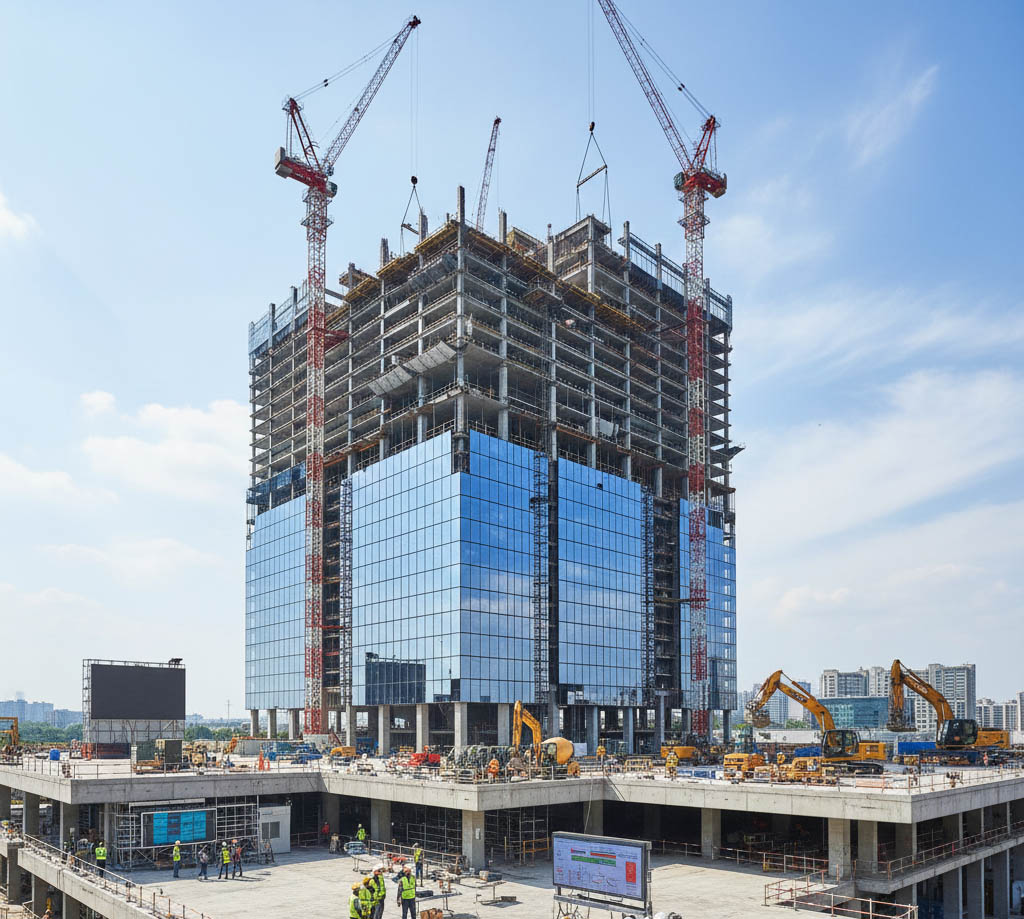
Commercial construction involves buildings designed for business and public use, such as offices, retail complexes, malls, hotels, hospitals, warehouses, and educational institutions. These projects are larger and more complex than residential construction, requiring advanced structural planning, fire safety systems, HVAC integration, elevators, and parking solutions. Commercial construction projects in India are driven by functionality, durability, and compliance with strict safety and operational regulations. Timelines are often tighter because delays can directly impact business operations and revenue. SEO-driven terms like commercial building construction in India, office construction projects, and retail infrastructure development are highly relevant in this category.
Understanding the Scope of Construction Projects
Construction is a broad industry that covers everything from individual homes to massive national infrastructure projects. Residential construction, commercial construction, and infrastructure construction may appear similar on the surface, but they differ significantly in terms of scale, complexity, regulations, timelines, and execution approach. Understanding these differences is essential for clients, investors, and developers planning construction projects in India. Each segment plays a unique role in economic growth and urban development, and choosing the right construction partner depends on the type of project involved.
What Defines Residential Construction
Residential construction focuses on building living spaces designed for individuals and families. This includes independent houses, villas, apartments, townships, and housing societies. Residential construction projects in India prioritize comfort, safety, aesthetics, and efficient space utilization. Factors such as ventilation, natural light, material quality, and finishing play a major role in residential buildings. Compared to other construction types, residential projects usually operate on smaller budgets and shorter timelines. However, compliance with building codes, local development authority norms, and sustainability standards remains critical. High SEO keywords such as residential construction in India, housing construction projects, and home construction services define this segment clearly.
Key Characteristics of Commercial Construction
Commercial construction involves buildings designed for business and public use, such as offices, retail complexes, malls, hotels, hospitals, warehouses, and educational institutions. These projects are larger and more complex than residential construction, requiring advanced structural planning, fire safety systems, HVAC integration, elevators, and parking solutions. Commercial construction projects in India are driven by functionality, durability, and compliance with strict safety and operational regulations. Timelines are often tighter because delays can directly impact business operations and revenue. SEO-driven terms like commercial building construction in India, office construction projects, and retail infrastructure development are highly relevant in this category.
Understanding the Scope of Construction Projects
Construction is a broad industry that covers everything from individual homes to massive national infrastructure projects. Residential construction, commercial construction, and infrastructure construction may appear similar on the surface, but they differ significantly in terms of scale, complexity, regulations, timelines, and execution approach. Understanding these differences is essential for clients, investors, and developers planning construction projects in India. Each segment plays a unique role in economic growth and urban development, and choosing the right construction partner depends on the type of project involved.
What Defines Residential Construction
Residential construction focuses on building living spaces designed for individuals and families. This includes independent houses, villas, apartments, townships, and housing societies. Residential construction projects in India prioritize comfort, safety, aesthetics, and efficient space utilization. Factors such as ventilation, natural light, material quality, and finishing play a major role in residential buildings. Compared to other construction types, residential projects usually operate on smaller budgets and shorter timelines. However, compliance with building codes, local development authority norms, and sustainability standards remains critical. High SEO keywords such as residential construction in India, housing construction projects, and home construction services define this segment clearly.
Key Characteristics of Commercial Construction
Commercial construction involves buildings designed for business and public use, such as offices, retail complexes, malls, hotels, hospitals, warehouses, and educational institutions. These projects are larger and more complex than residential construction, requiring advanced structural planning, fire safety systems, HVAC integration, elevators, and parking solutions. Commercial construction projects in India are driven by functionality, durability, and compliance with strict safety and operational regulations. Timelines are often tighter because delays can directly impact business operations and revenue. SEO-driven terms like commercial building construction in India, office construction projects, and retail infrastructure development are highly relevant in this category.
Building home, happy hearts
Building home, happy hearts
Innovative technology with building better development
Innovative technology with building better development
Discovering possibility and transparent communication
Discovering possibility and transparent communication
The ability to turnaround costing with sustainable construction
The ability to turnaround costing with sustainable construction
Building home, happy hearts
Innovative technology with building better development
Discovering possibility and transparent communication
The ability to turnaround costing with sustainable construction
Building home, happy hearts
Innovative technology with building better development
Discovering possibility and transparent communication
The ability to turnaround costing with sustainable construction
What Makes Infrastructure Construction Different
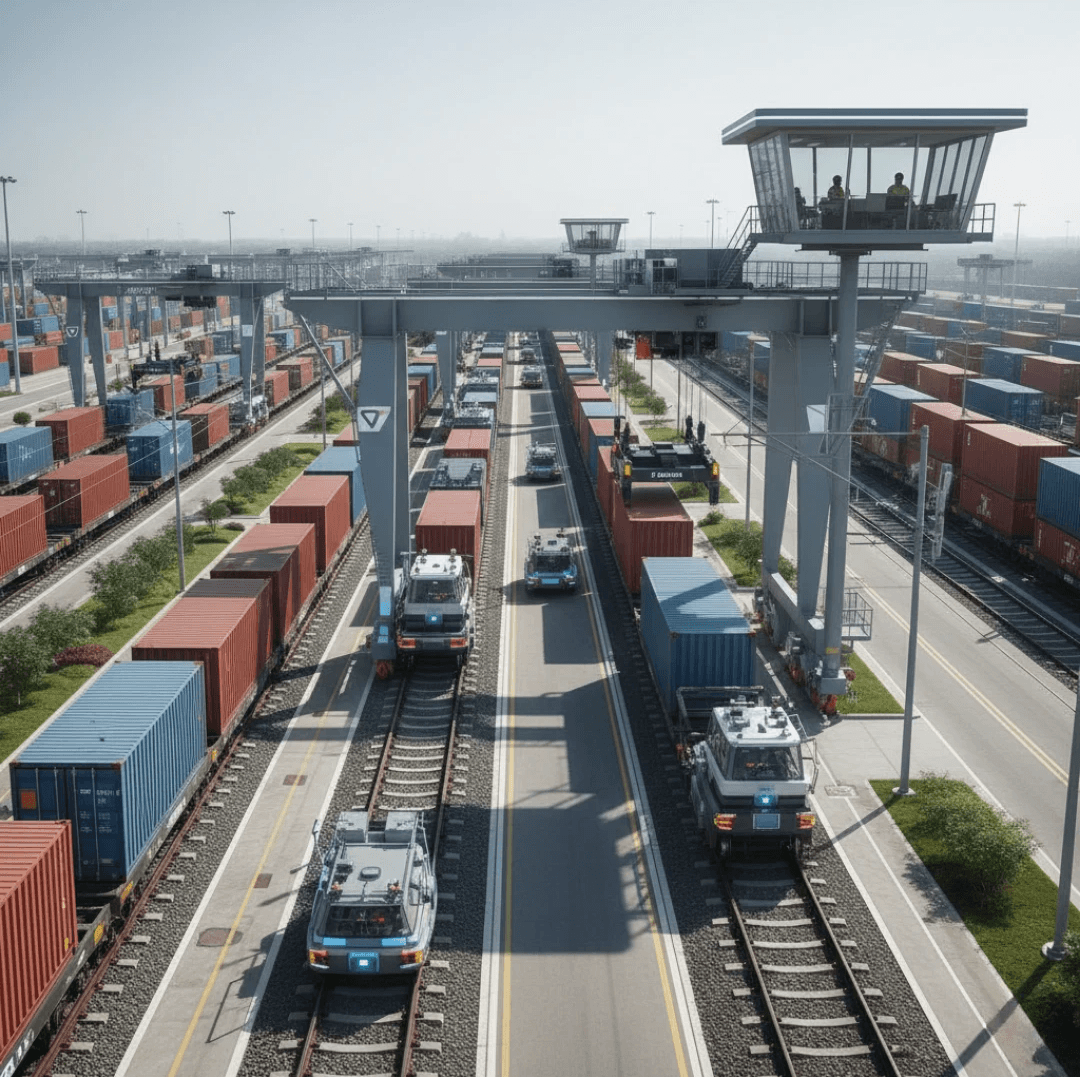
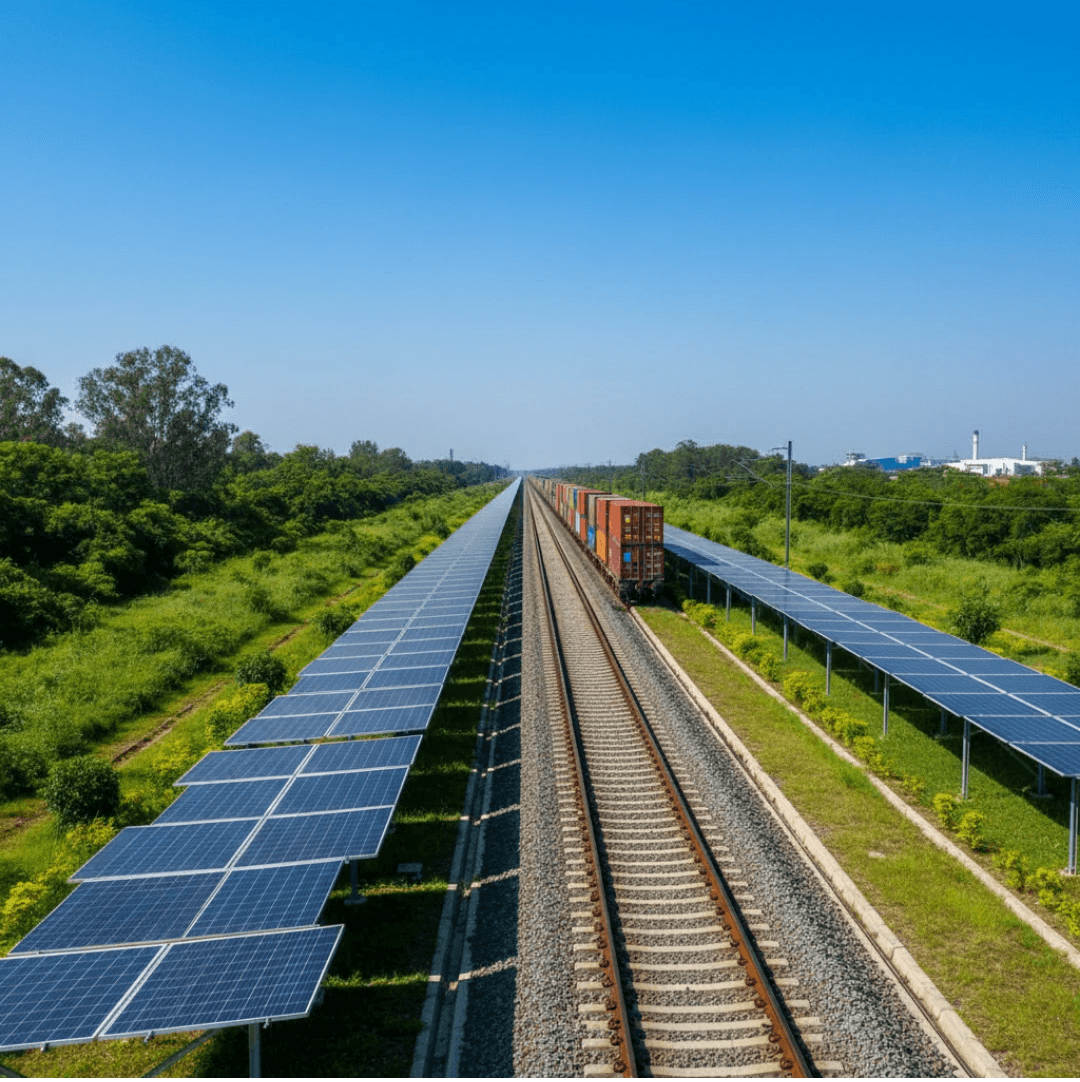
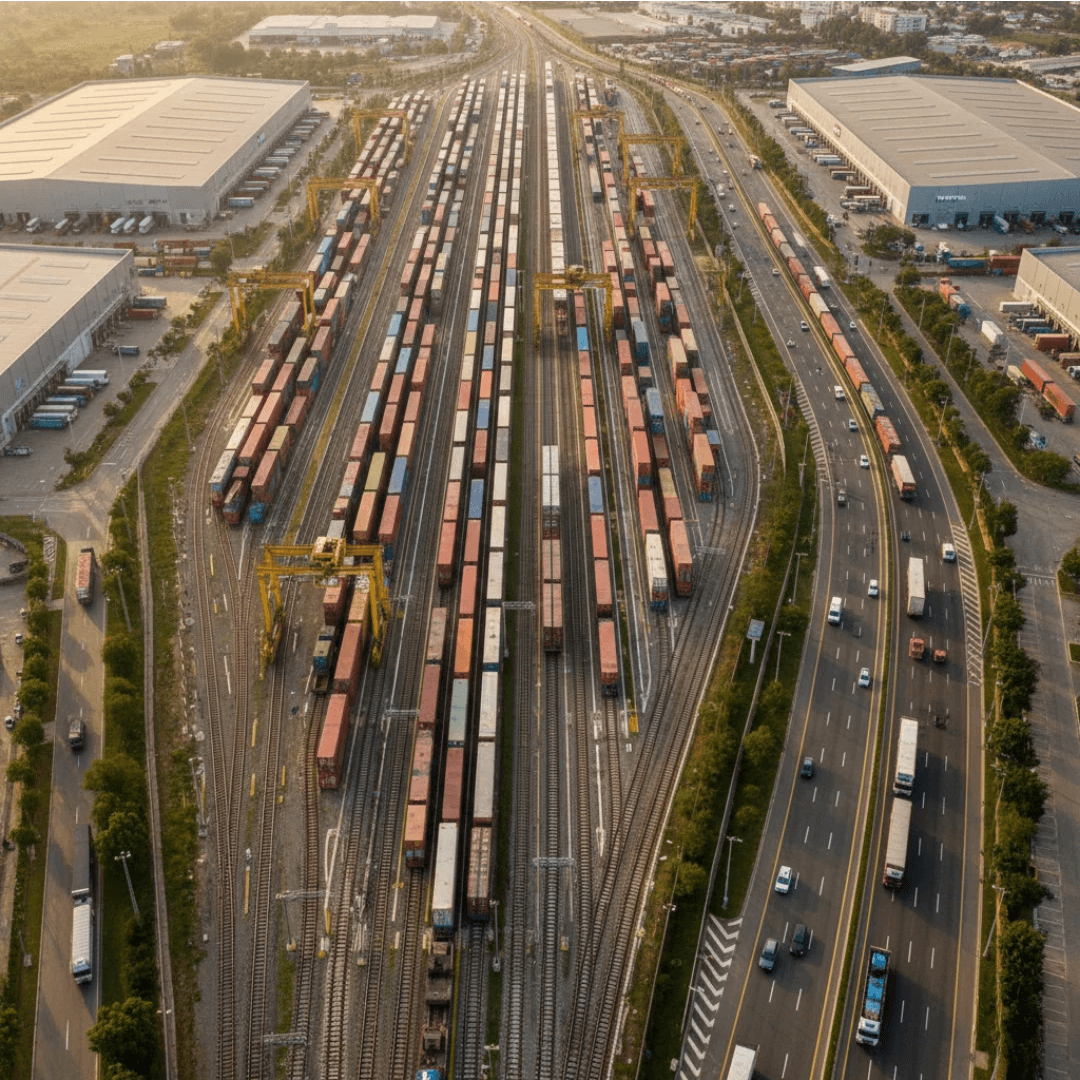
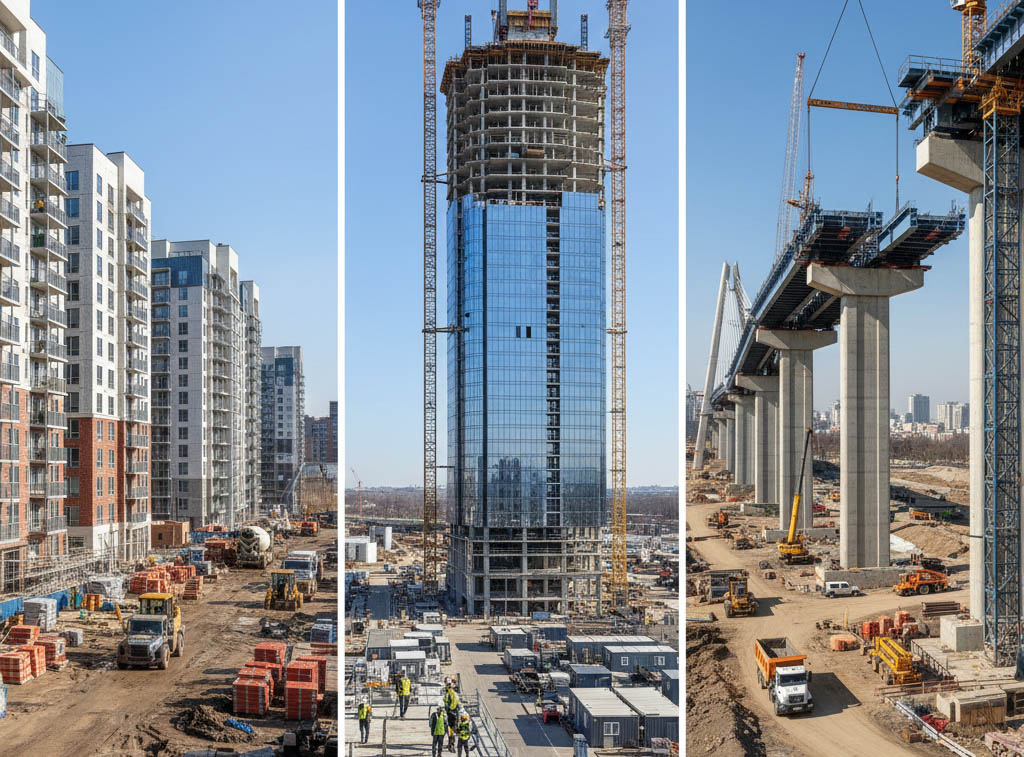
Infrastructure construction operates on a completely different scale compared to residential and commercial projects. It includes roads, highways, railways, bridges, flyovers, airports, metro systems, water supply networks, drainage systems, and power infrastructure. These projects are typically government-led or executed through public-private partnerships and involve long execution timelines, heavy machinery, and complex engineering challenges. Infrastructure construction in India focuses on durability, safety, and long-term public utility rather than aesthetics. Keywords such as infrastructure construction projects in India, civil infrastructure development, and large-scale construction projects strongly define this segment.
Differences in Planning and Design Approach
Residential construction planning is largely centered on lifestyle needs, space optimization, and visual appeal. Commercial construction planning focuses on operational efficiency, footfall movement, and scalability. Infrastructure construction planning, on the other hand, requires detailed feasibility studies, traffic analysis, environmental impact assessments, and coordination with multiple authorities. The design phase becomes increasingly complex as projects move from residential to commercial and finally to infrastructure construction, highlighting the importance of technical expertise and experience in large-scale construction projects.
Regulatory and Compliance Variations
Regulatory requirements increase significantly from residential to infrastructure construction. Residential projects mainly deal with local municipal approvals and building regulations. Commercial construction involves additional compliance related to fire safety, accessibility, and operational norms. Infrastructure construction faces the most stringent regulations, including environmental clearances, safety audits, land acquisition approvals, and multi-agency coordination. Managing these regulatory complexities is a key challenge in infrastructure construction projects in India and requires experienced construction and infrastructure development companies.
What Makes Infrastructure Construction Different
Infrastructure construction operates on a completely different scale compared to residential and commercial projects. It includes roads, highways, railways, bridges, flyovers, airports, metro systems, water supply networks, drainage systems, and power infrastructure. These projects are typically government-led or executed through public-private partnerships and involve long execution timelines, heavy machinery, and complex engineering challenges. Infrastructure construction in India focuses on durability, safety, and long-term public utility rather than aesthetics. Keywords such as infrastructure construction projects in India, civil infrastructure development, and large-scale construction projects strongly define this segment.
Differences in Planning and Design Approach
Residential construction planning is largely centered on lifestyle needs, space optimization, and visual appeal. Commercial construction planning focuses on operational efficiency, footfall movement, and scalability. Infrastructure construction planning, on the other hand, requires detailed feasibility studies, traffic analysis, environmental impact assessments, and coordination with multiple authorities. The design phase becomes increasingly complex as projects move from residential to commercial and finally to infrastructure construction, highlighting the importance of technical expertise and experience in large-scale construction projects.
Regulatory and Compliance Variations
Regulatory requirements increase significantly from residential to infrastructure construction. Residential projects mainly deal with local municipal approvals and building regulations. Commercial construction involves additional compliance related to fire safety, accessibility, and operational norms. Infrastructure construction faces the most stringent regulations, including environmental clearances, safety audits, land acquisition approvals, and multi-agency coordination. Managing these regulatory complexities is a key challenge in infrastructure construction projects in India and requires experienced construction and infrastructure development companies.
What Makes Infrastructure Construction Different
Infrastructure construction operates on a completely different scale compared to residential and commercial projects. It includes roads, highways, railways, bridges, flyovers, airports, metro systems, water supply networks, drainage systems, and power infrastructure. These projects are typically government-led or executed through public-private partnerships and involve long execution timelines, heavy machinery, and complex engineering challenges. Infrastructure construction in India focuses on durability, safety, and long-term public utility rather than aesthetics. Keywords such as infrastructure construction projects in India, civil infrastructure development, and large-scale construction projects strongly define this segment.
Differences in Planning and Design Approach
Residential construction planning is largely centered on lifestyle needs, space optimization, and visual appeal. Commercial construction planning focuses on operational efficiency, footfall movement, and scalability. Infrastructure construction planning, on the other hand, requires detailed feasibility studies, traffic analysis, environmental impact assessments, and coordination with multiple authorities. The design phase becomes increasingly complex as projects move from residential to commercial and finally to infrastructure construction, highlighting the importance of technical expertise and experience in large-scale construction projects.
Regulatory and Compliance Variations
Regulatory requirements increase significantly from residential to infrastructure construction. Residential projects mainly deal with local municipal approvals and building regulations. Commercial construction involves additional compliance related to fire safety, accessibility, and operational norms. Infrastructure construction faces the most stringent regulations, including environmental clearances, safety audits, land acquisition approvals, and multi-agency coordination. Managing these regulatory complexities is a key challenge in infrastructure construction projects in India and requires experienced construction and infrastructure development companies.
Construction is a broad industry that covers everything from individual homes to massive national infrastructure projects.
Construction is a broad industry that covers everything from individual homes to massive national infrastructure projects.
Construction is a broad industry that covers everything from individual homes to massive national infrastructure projects.
Construction is a broad industry that covers everything from individual homes to massive national infrastructure projects.
Differences in Execution, Resources, and Technology
Residential construction typically uses conventional construction techniques and smaller teams. Commercial construction requires advanced materials, specialized contractors, and coordinated execution across multiple systems. Infrastructure construction demands heavy equipment, advanced engineering technologies, skilled manpower, and robust project management frameworks. The use of modern construction technology, digital monitoring, and large-scale logistics management becomes more critical as projects move toward infrastructure development. SEO keywords like construction project management in India and civil construction execution fit strongly here.
Timeframes, Budgets, and Risk Levels
Residential construction projects usually have lower budgets and shorter timelines, with risks limited to design changes and material availability. Commercial construction carries higher financial risks due to scale, tenant requirements, and operational dependencies. Infrastructure construction involves the highest investment, longest timelines, and maximum risk exposure due to land issues, environmental factors, and public impact. Effective risk management and planning are therefore essential in infrastructure construction and development projects.
Choosing the Right Construction Partner
Understanding the difference between residential, commercial, and infrastructure construction helps clients choose the right execution partner. While residential projects demand attention to detail and quality finishing, commercial projects require technical coordination and speed. Infrastructure projects demand deep engineering expertise, compliance management, and execution capability at scale. Companies like Savik Infra, with experience across multiple construction domains, are well-positioned to handle complex infrastructure construction projects while maintaining quality and efficiency.
Conclusion: Three Segments, One Construction Ecosystem
Residential, commercial, and infrastructure construction are interconnected pillars of the construction industry in India. Each serves a distinct purpose and requires a specialized approach to planning, execution, and management. As urbanization and national development continue to accelerate, understanding these differences becomes essential for successful construction outcomes. With the right strategy, expertise, and execution capability, construction projects across all three segments can contribute to sustainable growth and long-term value creation
Differences in Execution, Resources, and Technology
Residential construction typically uses conventional construction techniques and smaller teams. Commercial construction requires advanced materials, specialized contractors, and coordinated execution across multiple systems. Infrastructure construction demands heavy equipment, advanced engineering technologies, skilled manpower, and robust project management frameworks. The use of modern construction technology, digital monitoring, and large-scale logistics management becomes more critical as projects move toward infrastructure development. SEO keywords like construction project management in India and civil construction execution fit strongly here.
Timeframes, Budgets, and Risk Levels
Residential construction projects usually have lower budgets and shorter timelines, with risks limited to design changes and material availability. Commercial construction carries higher financial risks due to scale, tenant requirements, and operational dependencies. Infrastructure construction involves the highest investment, longest timelines, and maximum risk exposure due to land issues, environmental factors, and public impact. Effective risk management and planning are therefore essential in infrastructure construction and development projects.
Choosing the Right Construction Partner
Understanding the difference between residential, commercial, and infrastructure construction helps clients choose the right execution partner. While residential projects demand attention to detail and quality finishing, commercial projects require technical coordination and speed. Infrastructure projects demand deep engineering expertise, compliance management, and execution capability at scale. Companies like Savik Infra, with experience across multiple construction domains, are well-positioned to handle complex infrastructure construction projects while maintaining quality and efficiency.
Conclusion: Three Segments, One Construction Ecosystem
Residential, commercial, and infrastructure construction are interconnected pillars of the construction industry in India. Each serves a distinct purpose and requires a specialized approach to planning, execution, and management. As urbanization and national development continue to accelerate, understanding these differences becomes essential for successful construction outcomes. With the right strategy, expertise, and execution capability, construction projects across all three segments can contribute to sustainable growth and long-term value creation
Differences in Execution, Resources, and Technology
Residential construction typically uses conventional construction techniques and smaller teams. Commercial construction requires advanced materials, specialized contractors, and coordinated execution across multiple systems. Infrastructure construction demands heavy equipment, advanced engineering technologies, skilled manpower, and robust project management frameworks. The use of modern construction technology, digital monitoring, and large-scale logistics management becomes more critical as projects move toward infrastructure development. SEO keywords like construction project management in India and civil construction execution fit strongly here.
Timeframes, Budgets, and Risk Levels
Residential construction projects usually have lower budgets and shorter timelines, with risks limited to design changes and material availability. Commercial construction carries higher financial risks due to scale, tenant requirements, and operational dependencies. Infrastructure construction involves the highest investment, longest timelines, and maximum risk exposure due to land issues, environmental factors, and public impact. Effective risk management and planning are therefore essential in infrastructure construction and development projects.
Choosing the Right Construction Partner
Understanding the difference between residential, commercial, and infrastructure construction helps clients choose the right execution partner. While residential projects demand attention to detail and quality finishing, commercial projects require technical coordination and speed. Infrastructure projects demand deep engineering expertise, compliance management, and execution capability at scale. Companies like Savik Infra, with experience across multiple construction domains, are well-positioned to handle complex infrastructure construction projects while maintaining quality and efficiency.
Conclusion: Three Segments, One Construction Ecosystem
Residential, commercial, and infrastructure construction are interconnected pillars of the construction industry in India. Each serves a distinct purpose and requires a specialized approach to planning, execution, and management. As urbanization and national development continue to accelerate, understanding these differences becomes essential for successful construction outcomes. With the right strategy, expertise, and execution capability, construction projects across all three segments can contribute to sustainable growth and long-term value creation
OUR LATEST NEWS
OUR LATEST NEWS
OUR LATEST NEWS